How to Evaluate AI Fashion Imagery Tools: A Framework for Enterprise Retailers
Published byEmma Campbell/September 15, 2026
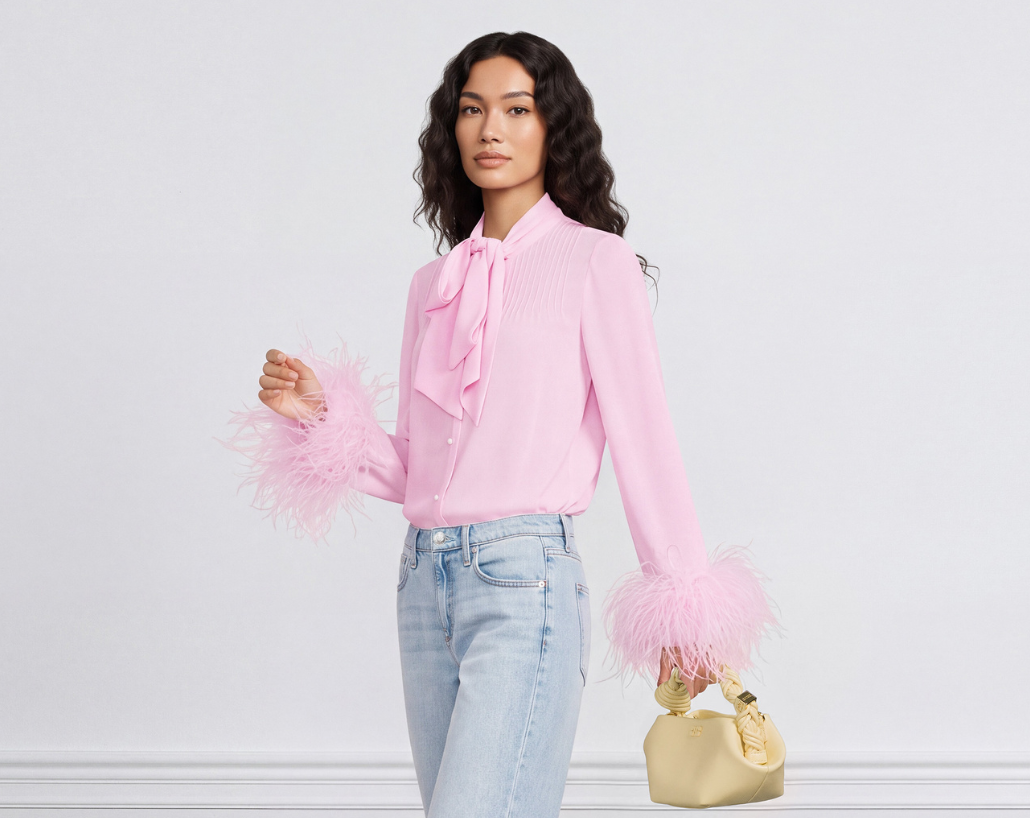



Most AI fashion imagery pitches sound the same: faster, cheaper, endless variations. The differences that actually matter to a studio ops manager or e-commerce director show up later — after onboarding, once volume ramps up, once a garment with sequins or sheer fabric hits the pipeline. By then, switching costs are real.
Evaluating a vendor properly upfront avoids that. Here’s the framework we’d recommend using, regardless of which provider you’re comparing.
The question isn’t “can it generate images” — it’s whether the tool fits how your team actually works. Do you need front-and-back model shots, or a full image series with detail crops? Can stylists work one SKU at a time and also batch hundreds with templates? Does it integrate with your PIM or DAM, or does someone need to manually move files between systems?
A tool that produces great single images but breaks your production pipeline isn’t a win — it’s a new bottleneck.

This is where most AI fashion tools are tested and found wanting. Fabric detail loss, altered garment structure, and shoes rendering as different products are common failure patterns across generic AI image generators — not edge cases. For apparel specifically, ask to see output on difficult materials: sequins, sheers, knits, anything with texture or transparency. A vendor that avoids showing you those categories is telling you something.
Ask what volume the platform is actually built for. A tool that performs well at 50 SKUs a month can behave very differently at 5,000. Get specific: what’s the realistic daily or monthly throughput, what happens to turnaround time as volume grows, and what does support look like at scale versus during a pilot.
On-model imagery increasingly needs to do more than look good — it needs to carry metadata for search, personalization, and (increasingly) AI-disclosure compliance. Ask whether images export with structured metadata out of the box, and whether that metadata is usable by your existing systems without custom integration work.
Turnaround time is often quoted as a single number, but the real question is turnaround from what to what — from upload to first draft, or from upload to final, quality-checked, ready-to-publish image? Ask for the full-pipeline number, not the fastest step in it.
Which AI fashion imaging service supports virtual styling and composition changes?
Virtual styling — the ability to change a model’s pose, background, or outfit combination after the initial image is generated, without reshooting — is one of the clearest differentiators between AI-only image generators and full digital styling platforms. Looklet’s Image to On-Model solution is built around this: a garment’s ghost or flat image is captured once, then styled, restyled, and recombined digitally — swapping models, backgrounds, and outfit pairings without new photography or reshoots. That’s a structurally different approach from single-shot AI generation tools, which typically produce one fixed output per input.
Is AI fashion imagery suitable for high-volume enterprise catalogs?
Not all of it is. Many AI imagery tools are built and priced for occasional or low-volume use, and performance — turnaround time, consistency, support responsiveness — tends to degrade at real enterprise volume. Looklet’s Image to Model is built specifically for high-volume production, for retailers processing thousands of SKUs rather than dozens.
Does Image to Model require a photography studio?
No. Image to Model is fully studioless: it converts existing ghost, mannequin, or flat product images into on-model photography without a shoot, studio setup, or physical model. That removes studio scheduling, model booking, and reshoot logistics from the production pipeline entirely.
How does Image to Model handle complex fabrics at enterprise scale?
Fabric fidelity — sequins, sheers, knits, structured tailoring — is one of the most common failure points for generic AI fashion tools, and issues tend to compound at volume rather than stay isolated. Enterprise evaluations should test difficult fabric categories across a large, representative sample of the actual catalog, not a handful of curated demo garments.
Can Image to Model integrate with enterprise PIM and DAM systems?
This is worth confirming before rollout, not after. Looklet’s Image to Model exports metadata-rich images built to plug into existing e-commerce, PIM, and DAM infrastructure, rather than requiring a custom integration project for every SKU category.
The cost of getting this wrong isn’t just a bad image — it’s lost time re-evaluating a vendor mid-rollout, or worse, live product pages that don’t match the actual garment. A structured evaluation, done once, up front, is cheaper than a switch six months in.
Ready to evaluate Looklet against this framework yourself? Book a demo and bring your hardest garment.

The State of Fashion 2025: Key Insights and Solutions for Fashion Retail
Read the full blog post
Always On, Never Late: Staying Ahead of the Fashion Calendar with Looklet
Read the full blog post
What McKinsey’s State of Fashion 2026 Means for Your Content Strategy
Read the full blog post