How Fashion Brands Are Using AI Imagery – and How to Do the Same
Published byEmma Campbell/October 27, 2026
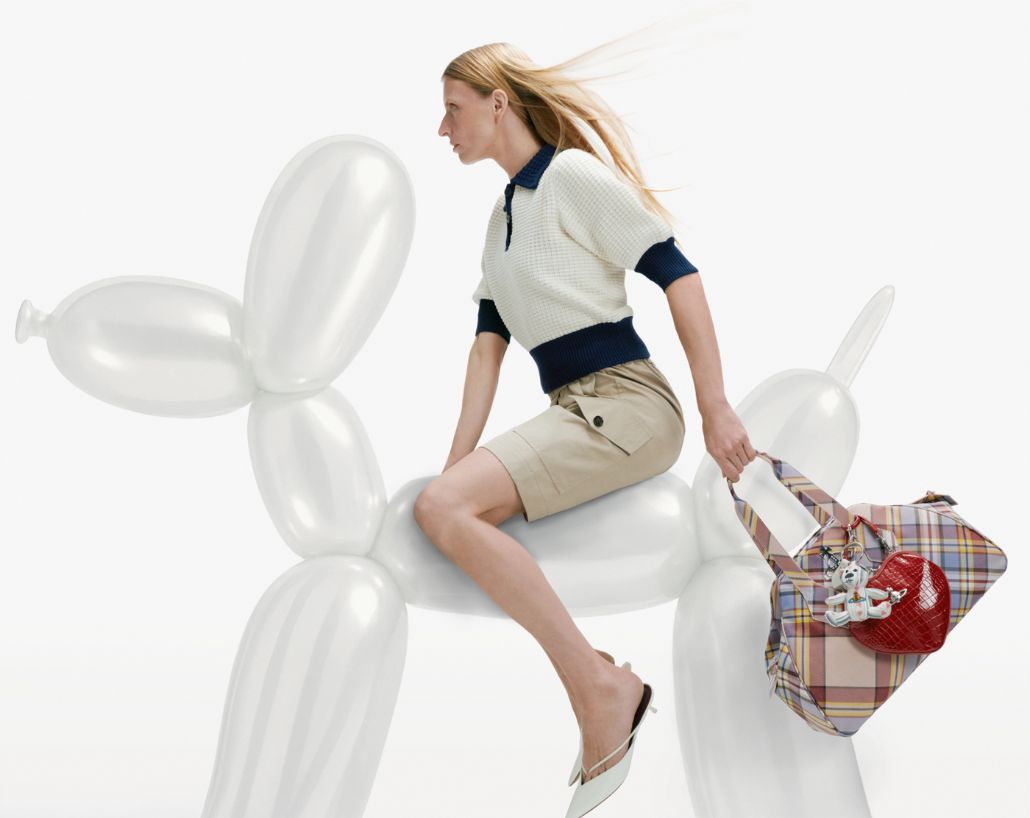



The largest fashion retailers now use AI to turn a limited number of real photos into imagery for far more products, markets and channels. Zara edits existing model shots to show new garments, H&M and Zalando work with consented digital twins of real models, and Zalando generates most of its on-site marketing content with AI. The common thread is not the technology itself, but a controlled process: real products as the starting point, clear rights, quality checks and transparent labelling.
For years, the cost of a new product image was fixed: a sample, a studio, a model, a photographer, retouching. Every SKU added to the bill. That equation is changing fast, and the clearest signal is coming from the biggest names in fashion retail.
In December 2025, Zara confirmed that it asks models for permission to digitally edit existing photographs, using AI to place different garments on the same body rather than booking a new shoot for each item. According to reporting by Reuters and CityAM, models are paid as they would be for a separate shoot. Owner Inditex describes AI as a complement to its existing processes, not a replacement.
Mango launched a fully AI-generated campaign for its MH&M: digital twins with model consent
In March 2025, H&M announced it would create digital twins of 30 of its models, used only with each model’s permission. The models keep the rights to their twin and are paid on the same terms as traditional image use. H&M published its first campaign featuring the twins in July 2025, with AI-generated content clearly watermarked.
Zalando has gone furthest. By late 2024, around 70% of its editorial campaign images were AI-generated, and the company reported that production time fell from six to eight weeks to three to four days, at roughly 10% of the previous cost. In its 2025 results, Zalando said 90% of its on-site marketing content is now generated with AI, and it has produced 170,000 AI videos from existing product photography, now shown first on product pages where available.
ango Teen “Sunset Dream” collection in July 2024. Every garment was photographed for real first, then a generative model placed those garments on AI models, and the art team selected, retouched and finalized the images in-house. Mango has since signaled plans to extend the approach to its women’s and men’s lines.

Look past the headlines and the four approaches share the same foundations. These are the parts worth copying.
1. Start from the real product. None of these brands invents garments. Zara edits real shoots, Mango photographs every item first, Zalando builds video from existing product photography. The AI changes the setting, the model or the format, never the product itself.
2. Get rights and consent right from day one. H&M and Zara both lead with consent and fair pay for the models involved. For any brand, the question “who owns this face?” needs a clear answer before an image goes live.
3. Treat accuracy as non-negotiable. Zalando openly states that relying on the human eye alone does not scale, and is building an automated “product truth” check that compares generated images against the original product for color, construction and brand marks. A beautiful image that misrepresents the garment simply moves the cost to returns.
4. Be transparent. H&M watermarks its AI content, and new EU transparency rules for AI-generated content are now taking effect. Labelling is fast becoming a baseline requirement rather than a choice.
There is a fifth, less obvious lesson: the value scales when AI moves from campaigns to the whole catalog. Campaigns get the press, but product detail pages are where most purchase decisions happen. Zalando’s push into AI video on PDPs reflects exactly that. (Read more about why AI video matters on product pages.)
Zara, H&M and Zalando built their capabilities with large internal teams, proprietary models and dedicated AI budgets. Most brands cannot, and do not need to. What they need is the same outcome: more on-model imagery, faster, at a predictable cost, without compromising product accuracy or brand consistency.
That is what a purpose-built fashion imagery platform provides. Instead of assembling a pipeline from scratch, brands plug into a process that already covers the four foundations above. (For the wider market context, see our take on why AI adoption is accelerating across fashion e-commerce.)
Looklet has worked at the intersection of fashion and technology since 2009, producing more than 7 million images for retailers including Holt Renfrew, Stockmann and The Very Group. Here is how the approach maps to what the leading brands are doing.
Ghost to model: start from the product images you already have. Upload flat lays, ghost mannequin, hanger or existing on-model images, and Looklet renders photorealistic on-model imagery from them. No new shoot, no studio booking, no model scheduling.
Models with clear rights, including your own. Choose from a library of real digitized models and AI-generated models across six categories: womenswear, menswear, plus size, big & tall, maternity and kidswear. Brands that want a signature face can develop exclusive AI-generated models built around their own identity.
Accuracy built into the workflow. Every look generates four options to choose from, and every image passes a human quality control check before delivery, with one-day turnaround on adjustments. It is the same principle Zalando describes: AI for speed, a dedicated check for product truth. (More in why AI-generated fashion imagery still needs a human eye.)
Transparency by default. C2PA metadata, the emerging standard for certifying AI-generated content, is included on every image, helping brands meet AI disclosure requirements as they take effect.
From still images to video. Looklet’s AI video turns existing on-model images (front, front right, back and back left) into motion content for product pages, list views and social, without a video shoot.
One asset, many uses. Restyle looks for new seasons or out-of-stock items, and swap backgrounds for marketplaces such as Amazon and Zalando, without reshooting.

Across clients, Looklet’s workflows are built to cut time to market by up to 88% and production costs by 40–50% compared with traditional on-model photography, with teams exporting up to 500 item images a day versus around 60 shot on-model.
At Holt Renfrew, turnaround time has fallen by 54%, and adding AI video to product pages has lifted conversion by around 30%. “With Looklet, our daily production is far higher, and it’s more cost-effective than live model shoots,” says Suzi Staheli, Photography Manager at Holt Renfrew. Stockmann has reduced turnaround time by 60%.
The largest retailers use AI to place real garments on real or AI-generated models, create consented digital twins of models, generate campaign and marketing imagery, and turn existing product photos into video. Zalando, for example, generates 90% of its on-site marketing content with AI.
Not usually. Most brands still start from real product photography. AI multiplies the value of those images by putting garments on models, changing settings and creating variations, rather than inventing the product from scratch.
Through a dedicated quality step that compares generated images against the original garment for details like color, fabric texture, neckline and fit. Zalando automates this check; Looklet combines AI generation with human quality control on every image.
Increasingly, yes. New EU transparency rules for AI-generated content are taking effect, and brands like H&M already watermark their AI imagery. C2PA metadata provides a verifiable, standardized way to certify AI-generated images.
What is the average return rate for online clothing? Online apparel return rates in the US are around 24%, according to Coresight Research. That is above the 19.3% average across all online purchases reported by the NRF for 2025.
Can better product images really reduce returns? Yes, for returns caused by unmet expectations. In Akeneo’s shopper survey, 34% cited misleading product images as a reason for returning, and 62% said more accurate product information would make them less likely to return.
Does on-model imagery reduce returns more than flat lays or ghost mannequin shots? On-model imagery shows proportion, drape and fit on a body, which flat lays and ghost mannequin images cannot. That extra context helps shoppers choose the right size and style before ordering.
Is AI-generated product imagery accurate enough for fashion e-commerce? It depends on the tool. Fashion-specific AI with quality control against the source garment can be true to the product. Generic tools that skip that check risk altering color, texture or shape, which can increase returns.

Always On, Never Late: Staying Ahead of the Fashion Calendar with Looklet
Read the full blog post
Virtual Outfit Try-On: How to Use the Looklet Dressing Room
Read the full blog post
Looklet Management Acquires Majority Control of Company, Buys Out Former Shareholder VeePee
Read the full blog post