3 Proven Tactics to Increase Conversion on Fashion Product Pages (PDPs)
Published byEmma Campbell/November 27, 2026
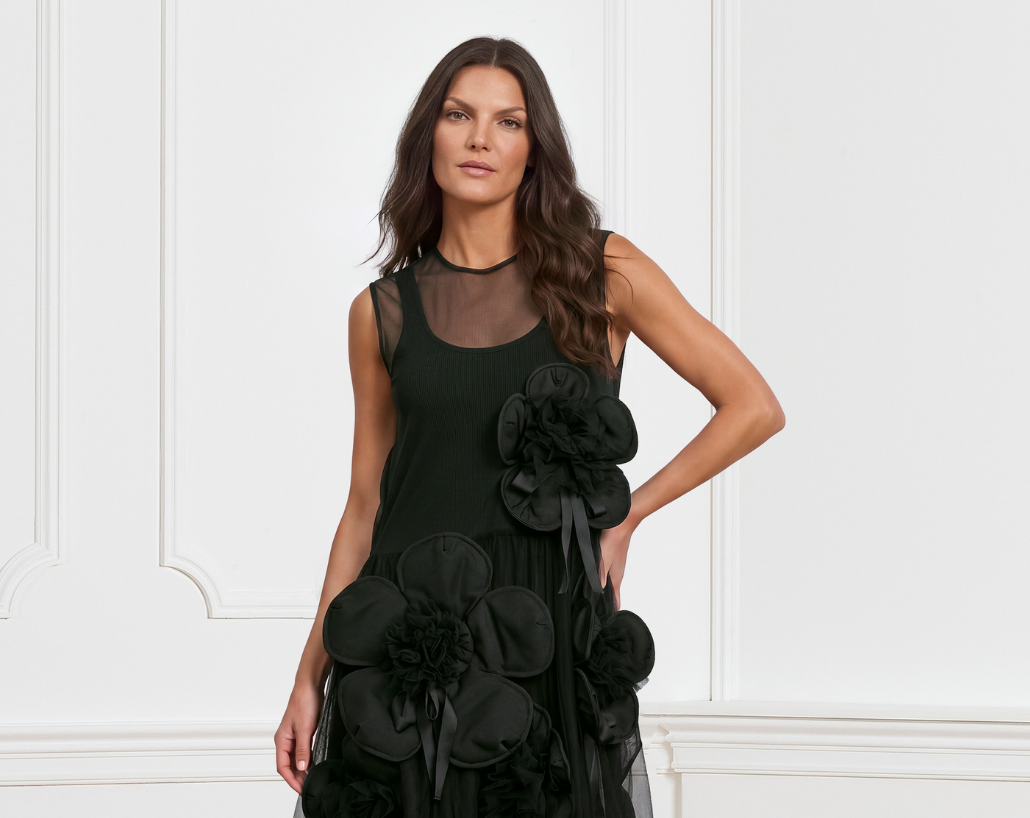



Traffic is expensive, and this week it costs more than ever. Once a shopper lands on a product page, though, the images decide whether that visit turns into a sale. Baymard Institute’s usability testing found that 56% of shoppers start by looking at the product images. Salsify’s 2025 research found that 42% will leave a page if the visuals are missing or poor.
Shoppers buying clothes online can’t touch the fabric or try anything on. Every image has to answer a question they would otherwise settle in a fitting room. Three tactics answer those questions better than anything else on the page.
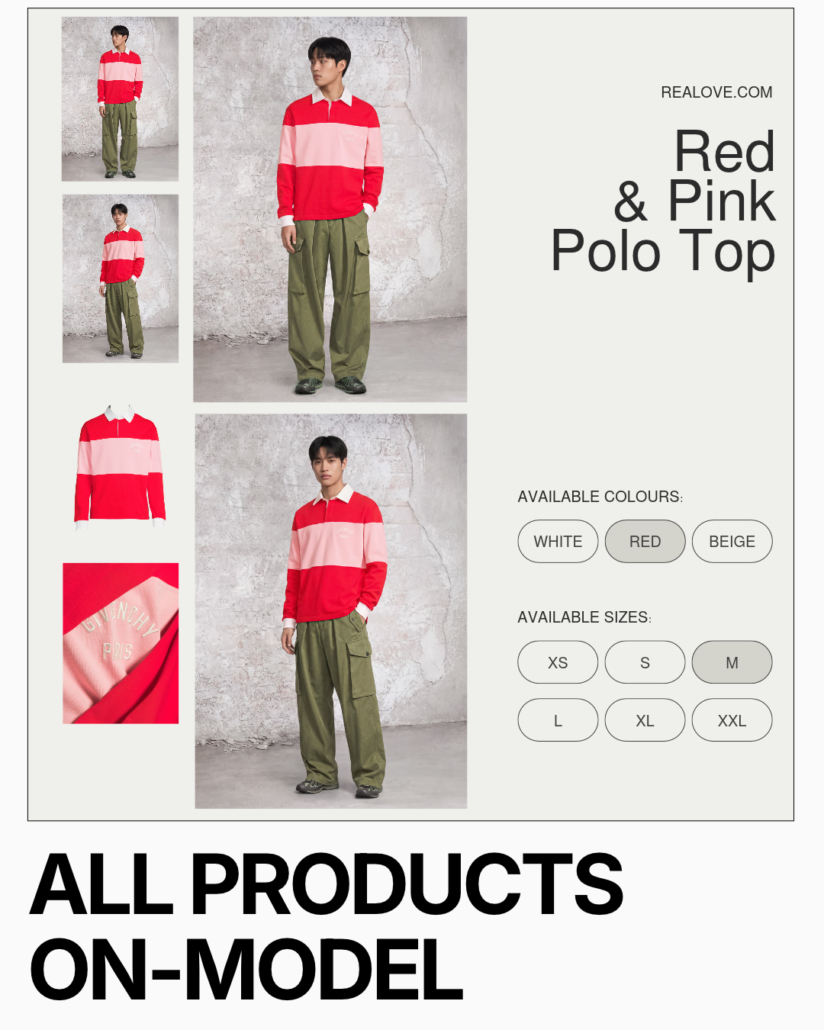
A ghost or packshot image shows what a product is. It can’t show where a hem falls, how a waist sits or how a fabric drapes. Baymard’s research shows that for worn products, shoppers need a human model to judge length, tightness and fit. Yet Baymard’s apparel benchmark found most sites still don’t consistently show clothing on a model.
The gap usually sits in the long tail. Hero products get studio time, while hundreds of other SKUs go live with ghost images only. Across Looklet clients, moving those pages to on-model imagery typically lifts conversion by 20–30%.
How to apply it: lead the gallery with an on-model hero image, and prioritise the high-traffic SKUs that currently have ghost images only.
A still image can’t show fabric weight, stretch or how a dress moves when someone walks. Short on-model video can, and shoppers respond to it. In Wyzowl’s research, 82% of people say a video has convinced them to buy a product.
Most brands are still missing it. A ChannelSight analysis of more than 500,000 products found that only 15% have video. Brands that add it stand out. When Holt Renfrew added video to its product pages, conversion rose by 30%.
How to apply it: a few seconds of a model walking or turning is enough. Place it near the top of the gallery, not at the end.
This is the question most PDPs still leave open. When every product is shown on a single body type, most shoppers have to guess how it would look on them. Some hesitate. Others order two sizes and return one.
A 2024 peer-reviewed study from the University of Bath, the University of Groningen and Vrije Universiteit Amsterdam tested this directly. The researchers found that thin-only model photos made fit harder to judge and held back purchase decisions. None of their studies found that showing models closer to the shopper’s own size reduced purchases. Participants also responded well to seeing the same item on different body types side by side.
The returns data tells the same story. Fit and size has been the top reason for online returns for six years running, according to Narvar. A Chain Store Age survey found that 45% of first-time customers won’t come back to a brand after a bad fit. A sale that comes back as a return can also cost you the customer.
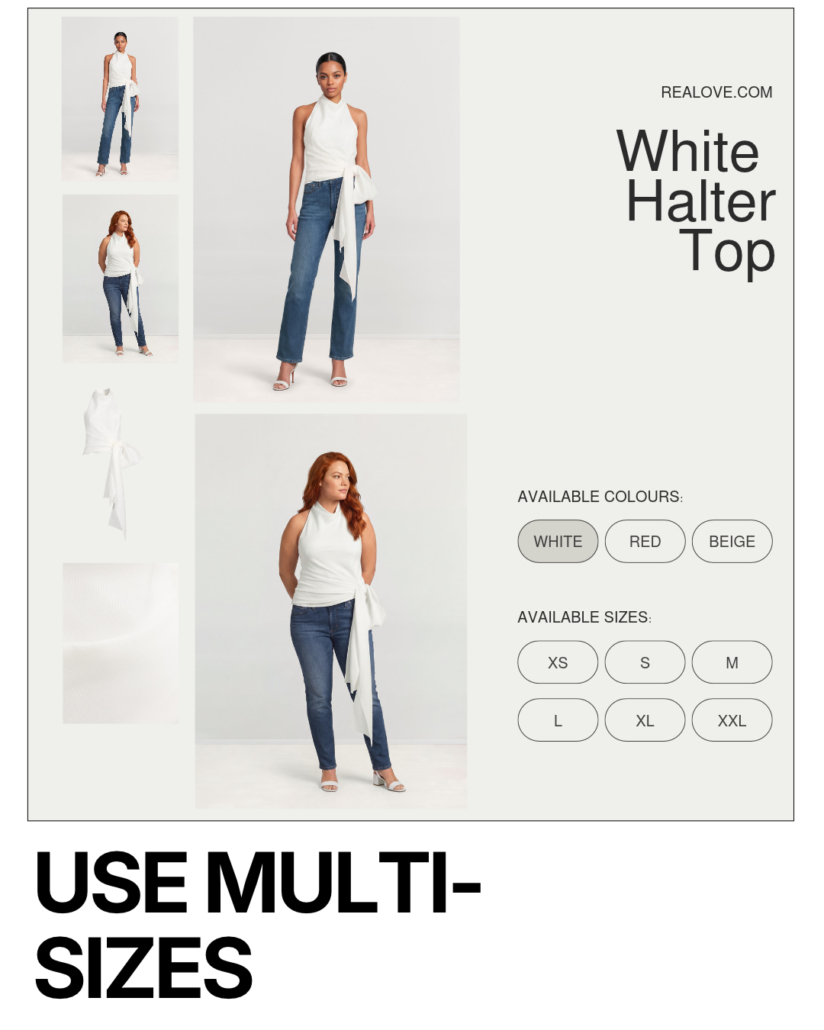
The researchers suggest a practical route for retailers who can’t shoot every item on every body. Show key items on several sizes, or spread different models across different products, so every shopper sees their size represented. With AI-generated models, including midsize, curve and big & tall bodies, extending the range no longer means multiplying shoot days.
How to apply it: Show bestsellers on at least two body types, and state the size each model is wearing.
The highest-converting fashion PDPs follow the shopper’s questions in order. They show how the product looks worn, how it moves and whether it fits someone like the shopper. On-model images, video and multisize imagery each answer one of those questions. Together they turn more of your traffic into sales that stay sold.
Looklet covers all three in one workflow. Start from the product images you already have, and Looklet turns them into on-model imagery and video without a new shoot. The same garment can then be shown across a range of bodies, from our curated model library to curve and big & tall. In December we’re launching a new midsize model in size 6, so even more shoppers will see the product on a body like their own.
What increases conversion on a fashion product page? On-model images, short product videos and multisize imagery all improve conversion because they answer the fit and appearance questions shoppers can’t settle online.
Does showing models in different sizes reduce returns? A 2024 peer-reviewed study found multisize model imagery helps shoppers judge fit. Since poor fit is the top reason for apparel returns, better fit judgement can reduce them.
How long should a product video be? A few seconds of on-model movement is usually enough to show drape, stretch and fit.
It also makes consistency easier. Every look can follow the same styling rules, poses and model choices, so the site feels like one brand rather than a mix of shoots.
The Quality Tax: What Fashion Brands Pay When AI Gets It Wrong
Read the full blog post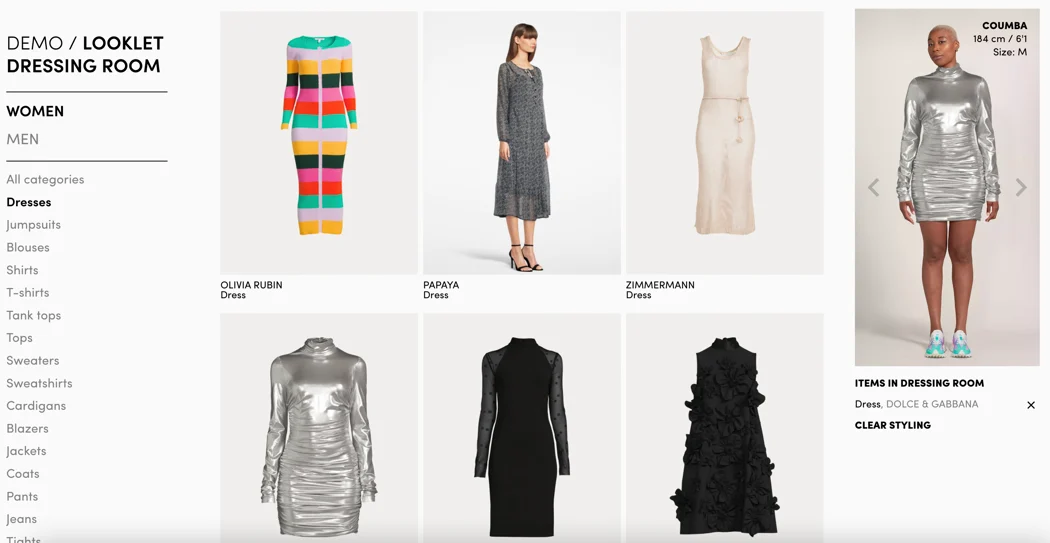
Virtual Outfit Try-On: How to Use the Looklet Dressing Room
Read the full blog post
Does AI Video Actually Convert on Product Pages? Here’s What Holt Renfrew’s Data Shows
Read the full blog post