AI Fashion Imagery: Why AI Adoption Is Accelerating Across Fashion eCommerce
Published byEmma Campbell/August 13, 2026
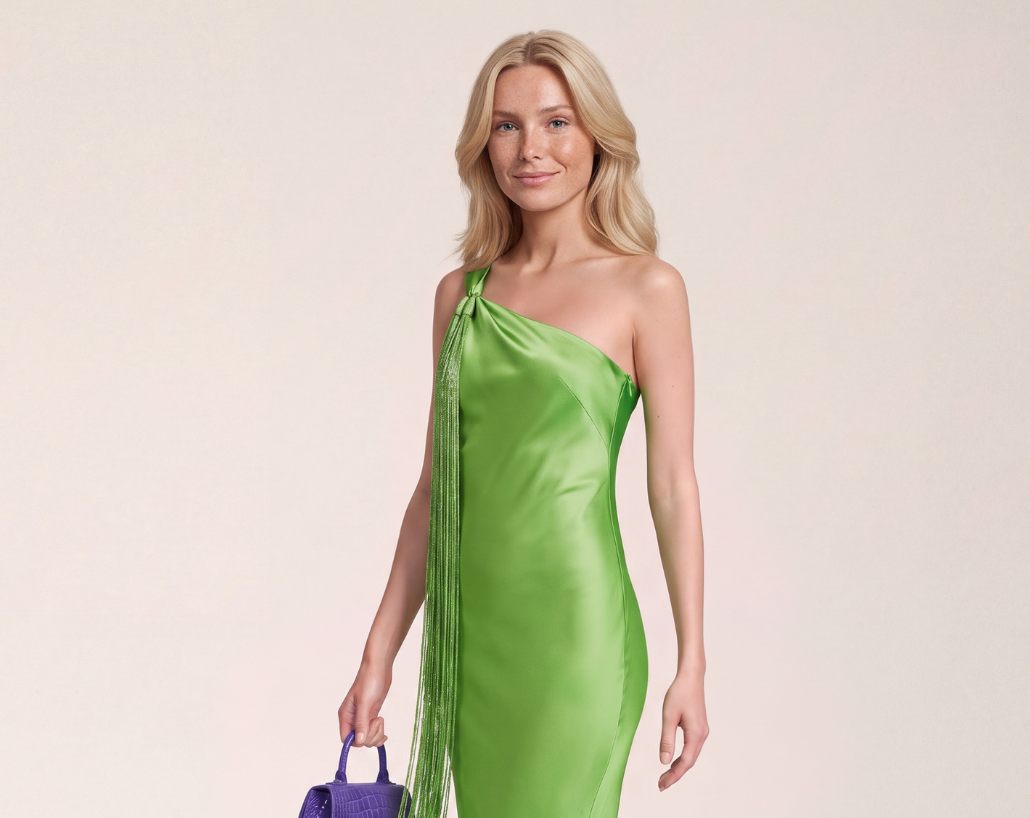



For decades, fashion imagery has been one of the most resource-intensive aspects of the fashion industry. Every collection requires extensive planning, model casting, studio time, photography, retouching, and coordination across multiple stakeholders. Creating the perfect set of product and campaign images has traditionally been a costly and time-consuming process.
Anyone working with fashion content knows that has changed since AI entered the chat. What once took weeks can now be achieved in hours. AI enables brands to produce high-quality fashion imagery faster, at lower cost, and at a scale that was previously impossible. For fashion retailers and brands, this creates significant opportunities – not only to streamline production, but also to improve personalization, localization, creative testing, and ultimately, business performance.
In this article, we explore how AI is reshaping fashion content production, what recent performance data reveals, and why AI adoption is likely to continue gaining momentum across the industry
Anyone who experimented early with AI for fashion content production will remember how limited the results used to be. Uncanny faces, unnatural poses, inconsistent styling – the list goes on. For a long time, AI-generated fashion imagery simply wasn’t good enough. However, by now, the technology has reached an entirely different level of realism and sophistication. AI-generated visuals are now capable of meeting the quality standards expected across fashion eCommerce, paid media, and campaign production.
The growing adoption of AI fashion imagery is driven by a simple reality: brands are expected to produce more content than ever before, while controlling costs and maintaining quality. AI helps solve that challenge by delivering four key advantages.
While these operational benefits are compelling, the most important question remains: How does AI-generated imagery perform with consumers?

The latest results from AI-powered fashion imagery suggest that the technology is delivering more than operational efficiencies, it is also driving measurable business outcomes.
Recent research continues to show the importance of visual content in ecommerce. 56% of consumers are more likely to purchase a product when the imagery looks professional and high quality. Additional studies indicate that high-resolution product images can increase conversions by more than 30%. Together, these findings highlight a simple truth: better visual context helps shoppers evaluate products more confidently and make purchase decisions faster.
Recent research suggests that AI-generated marketing imagery can perform on par with (and in some cases outperform) human-created visuals. In a large-scale study comparing AI-generated and traditional marketing images, AI-generated content received higher ratings for quality, realism, and visual appeal, highlighting how rapidly the technology has matured.
One of AI’s greatest advantages is its ability to dramatically increase the volume of creative testing. Brands can quickly generate multiple visual variations, test different model representations, styling approaches, and image formats, and continuously optimize based on performance data. What was once prohibitively expensive to test through traditional photography can now be explored at scale.
Several factors help explain why AI-generated fashion imagery is producing positive results in eCommerce environments.
Uniform presentations create a more cohesive shopping experience, reducing uncertainty and increasing confidence.
When teams can launch and evaluate new visual concepts quickly, they gain more opportunities to identify high-performing content.
Modern AI imagery can effectively showcase fit, fabric, silhouette, and garment details, helping shoppers better understand what they are purchasing.
Reduced production costs make it economically feasible to run more experiments, gather more performance data, and continuously improve visual content.

Despite the excitement surrounding AI-generated imagery, adoption has not been without controversy. Some brands have faced criticism for campaigns that appeared overly artificial or disconnected from their brand identity. Recent reactions to AI-generated luxury fashion campaigns illustrate an important lesson: consumers are willing to embrace AI, but only when it is executed thoughtfully. In many cases, the issue is not the use of AI itself, but the quality of the output. When imagery feels inauthentic, misrepresents products, or fails to align with brand expectations, the time saved in production can quickly be offset by additional reviews, corrections, and lost customer trust. Successful implementations typically share several characteristics:
The acceleration of AI adoption in fashion ultimately comes down to economics. As content becomes faster and cheaper to produce, the barriers to experimentation continue to fall. Brands can test more ideas, learn faster, and adapt more quickly to changing customer behavior. The competitive advantage is no longer simply having great creatives. It is having the ability to continuously improve creative activities based on real-world performance.

Looklet helps fashion brands scale on-model imagery without compromising the standards that make content perform. With built-in refinement, controlled model and styling options, automated workflows and a production approach designed specifically for fashion e-commerce, Looklet enables retailers to create content that is fast, flexible and commercially ready.
Ready to scale your visual production? Discover how Looklet can help.
Sources
Digital Fashion: Shaping the Future of Apparel Retail
Read the full blog post
Wehkamp partners with Looklet to create automated fashion photography
Read the full blog post
How to Choose an AI Fashion Imagery Platform: A Buyer’s Guide for Merchandising Teams
Read the full blog post
 Why AI Fashion Imagery Still Needs Human Quality Control