The Business Case for Brand Voice in Fashion E-Commerce
Published byEmma Campbell/July 9, 2026
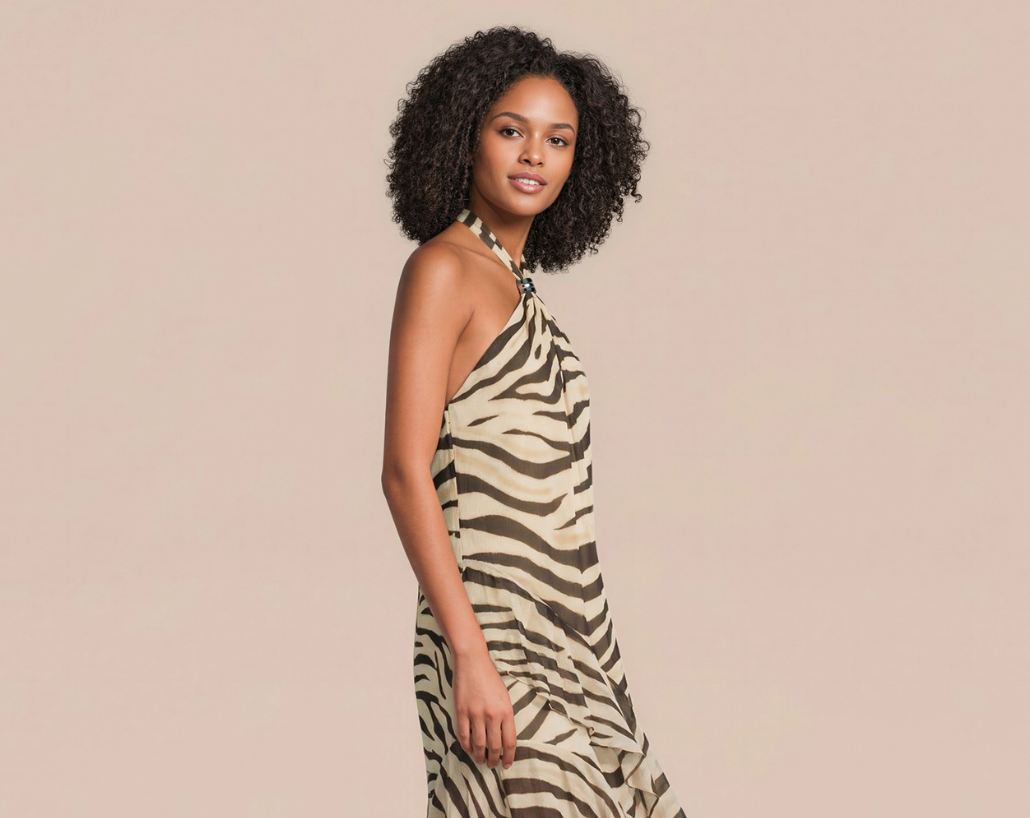



Imagine a customer with five browser tabs open. Each displays the same garment, at the same price, from five different fashion retailers. The product details, shipping terms and return policies are all comparable. Yet the consumer feels drawn to one store in particular. Why? In such a scenario, the differentiator is not price or even product features. It is perception – the sense that one brand communicates more coherently, more authentically, and more consistently than the others. In this article we explore why brand voice matters in fashion e-commerce, and how it is reinforced through visual consistency.
We often talk about brand voice as if it is merely stylistic preference. In reality, it is a structural asset that shapes every interaction between a consumer and a brand.
In fashion e-commerce, where physical experience is absent, brand voice must carry both interpretive and emotional weight. And just as importantly, that voice must be reinforced visually. Words and images together form a single integrated identity. Without coherence between them, brand voice is aspirational at best, and contradictory at worst.
Brand voice is the expression of a brand’s values, personality and perspective. It defines how a brand communicates, what it emphasizes, and what it assumes about its audience. In written form, voice manifests in product descriptions, editorial copy, category narratives, and campaign language. It shapes meaning beyond functional product attributes – why a garment matters, how it fits into a lifestyle, what it says about who the wearer is or wants to be.
When executed well:
When executed poorly:
But language alone does not carry the brand. In fashion, visual identity is equally foundational.

In the physical world, a shopper can touch fabric, observe drape, and gauge proportion directly. In digital retail, imagery carries that responsibility.
If verbal identity defines who the brand is, consistent imagery defines how that identity is perceived. When image and language align, the brand voice resonates. When they diverge, consumers register dissonance, even if they cannot articulate why.
The challenge for most fashion brands lies in scale. Product assortments grow rapidly and seasonal drops arrive constantly. Traditional photography, with varied studios, lighting setups, models and regional adaptations, introduces variability that weakens visual coherence over time.
The emergence of AI-generated on-model imagery represents more than a production innovation. It introduces a new form of visual governance.
Rather than relying solely on repeated physical photo shoots, brands can now establish consistent visual parameters, from model representation to styling language and lighting direction, and apply them systematically across large assortments.
When visual rules are clearly defined and upheld at scale, the brand’s narrative gains stability. Seasonal evolution becomes controlled rather than fragmented. Representation can be intentionally aligned with target audiences rather than determined by logistical constraints.
AI-generated on-model imagery, when used thoughtfully, supports the upkeep of brand voice by ensuring that what the brand shows remains as intentional as what it says.

Brand voice evolves over time. It adapts to cultural context, shifting consumer expectations and seasonal direction. Yet its core identity must remain recognizable.
Visual consistency acts as a stabilizing force in that evolution. It ensures that experimentation does not become dilution. From a commercial perspective, the implications are significant:
Fashion e-commerce is no longer defined solely by product quality or price competitiveness. It is defined by integrated expression — the seamless alignment of narrative, visual identity, and operational execution.
AI-generated visual systems are part of that evolution. They do not replace creativity or storytelling; they provide the structural consistency that allows both to scale. When a brand’s voice and its on-model imagery reinforce one another, the result is a cohesive brand world rather than a collection of isolated assets.
Returning to the scenario of five identical products across five webshops, the customer ultimately chooses the brand that feels most coherent — the one whose words and visuals align in tone, intention, and identity. In markets where duplication is easy, coherence becomes differentiation.
And brand voice, supported by disciplined visual execution, becomes one of the most defensible assets a fashion brand can build.

Looklet helps translate brand direction into consistent visual execution. With access to exclusive models tailored to your brand, and automatic templates that make it easy to create and maintain brand guidelines, teams can ensure a cohesive look across all imagery.
Our platform also makes it simple to evolve your visual identity over time. Update elements like backgrounds, styling, or overall look and feel across your entire image library in one go (no need for manual rework) so your brand stays consistent even as assortments scale.
Our technology powers efficient, scalable visual production for businesses of all sizes.
Why AI Fashion Imagery Still Needs Human Quality Control
Read the full blog post
How to Evaluate AI Fashion Imagery Tools: A Framework for Enterprise Retailers
Read the full blog post
Why AI-Generated Models Are Redefining Traditional E-Commerce Photography
Read the full blog post
 AI Fashion Imagery: Why AI Adoption Is Accelerating Across Fashion eCommerc...