The PDP Feature Driving 65% Higher Conversions in Fashion E-Commerce
Looklet AI Video
Published byEmma Campbell/April 9, 2026
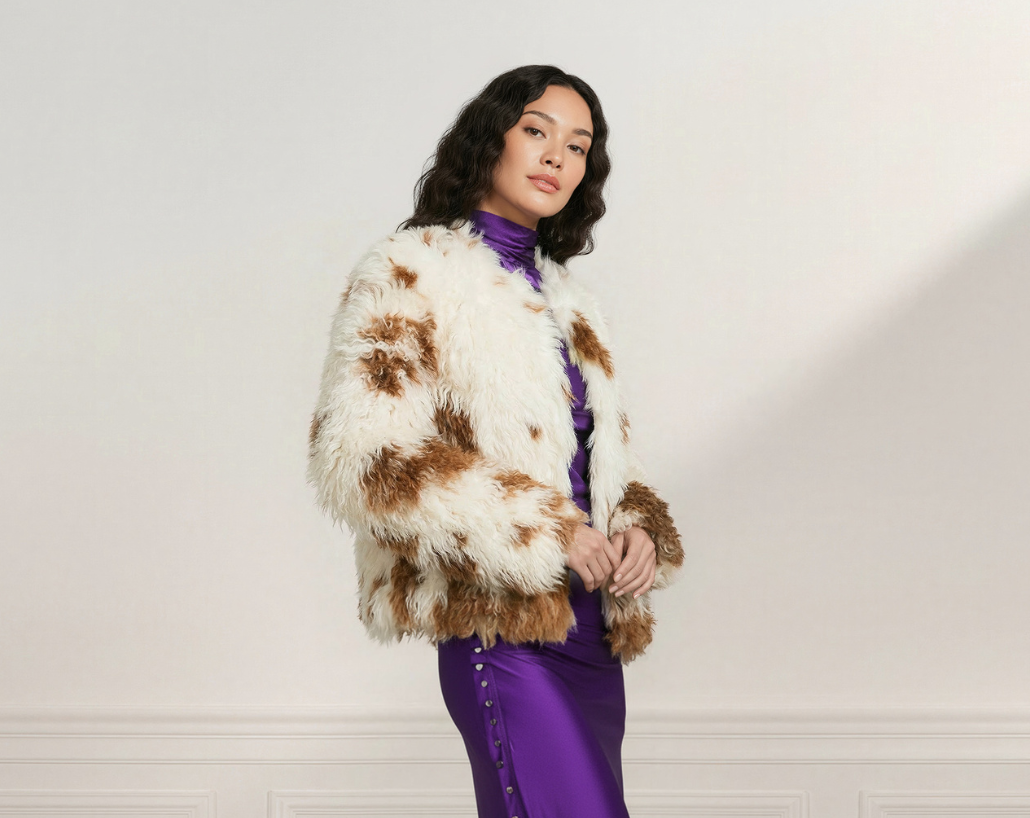



E-commerce is built for speed and convenience, but buying fashion remains emotional and sensory. Shoppers want more than a clean product shot. They want context: How does the fabric move? How does the garment look from different angles? How does it behave on the body in motion?
When customers can see how a product moves and interacts with the body, uncertainty decreases. And when uncertainty decreases, purchase confidence increases. In fact, 73% of online consumers say they are more likely to buy a product after watching a video that explains how it works.* Video brings online shopping closer to the in-store experience by helping customers make more informed decisions.

As customer acquisition costs rise and attention becomes harder to win, product presentation carries more commercial weight. Shoppers increasingly expect to see products in motion, not just in still photography. Video strengthens product storytelling by adding what images cannot: movement, flow, perspective, and realism. It turns a product from something displayed on a page into something that feels more tangible and easier to imagine in real life.
For fashion brands, that matters because uncertainty remains one of the biggest barriers to conversion. The clearer the presentation, the easier it is for shoppers to picture the product in their own wardrobe and purchase with confidence.
At the product level, stronger visual presentation can increase engagement and help shoppers move more confidently toward purchase. At the operational level, better product understanding can reduce avoidable returns, which is especially important in apparel, where return rates carry significant margin and logistics costs. The result*:
In categories like apparel, even marginal return-rate improvements translate into significant operational savings.
The value of video is clear. The challenge, however, has always been scale. Producing traditional video for thousands of SKUs is expensive and operationally heavy. Studio shoots, models, post-production, distribution… Go ahead and multiply that by a full seasonal collection and the numbers escalate quickly.
With AI, videos can be generated from the image assets that have already been shot. That means brands can turn existing product imagery into motion-based content without adding a new studio process for every item. In practical terms, this reduces incremental production effort while extending the value of assets already captured. For large fashion catalogs, that means:
It is, so to speak, no longer about deciding which products “deserve” video. Video becomes a scalable presentation layer across the catalog.
Product detail pages are among the most commercially important surfaces in e-commerce. Shoppers often land directly on a PDP through search, social, paid campaigns, or marketplace discovery, rather than entering through the homepage.
That makes the PDP much more than a place to complete a purchase. It is often the first meaningful brand touchpoint, the primary conversion environment, and increasingly a discovery surface as well.
Because purchase intent is often highest on the PDP, stronger visual context can directly improve engagement, confidence, and conversion. Video is especially valuable here because it helps answer the questions shoppers are already asking at the moment of decision.
But its importance extends beyond the on-page experience. As search behavior evolves, brands also need to think about how content is surfaced in AI-driven and search-generated environments. This is where GEO, or Generative Engine Optimization, becomes relevant. Richer product content can improve not only how products perform once a shopper arrives, but also how they are discovered in the first place.
In that sense, PDP video serves two functions: it supports conversion, and it strengthens discoverability.
AI-powered video isn’t limited to the PDP, it supports every stage of the journey:
New collections can be presented dynamically without requiring a full-scale video shoot. AI-generated motion creates launch energy while keeping production timelines tight.
Different audiences respond to different signals such as fit, styling, price, sustainability. AI allows video emphasis to align with what matters most to specific customer segments.
Motion outperforms static in crowded feeds. AI makes it possible to generate high volumes of variation for testing without increasing production complexity.
Customers increasingly expect to see products in motion. The question is no longer whether to use video, but how to implement it intelligently. AI video transforms product presentation from a cost center into a scalable growth driver. For fashion e-commerce brands managing complexity, speed, and margin pressure, that shift is no less than foundational.
Sources
Looklet Launches Virtual Studio – Create On-Model Imagery in Minutes
Read the full blog post
Guide to E-Commerce Photography in 2021
Read the full blog post
Why AI Fashion Imagery Still Needs Human Quality Control
Read the full blog post
 Looklet’s Guide to AI Laws and Imagery: What You Need to Know